
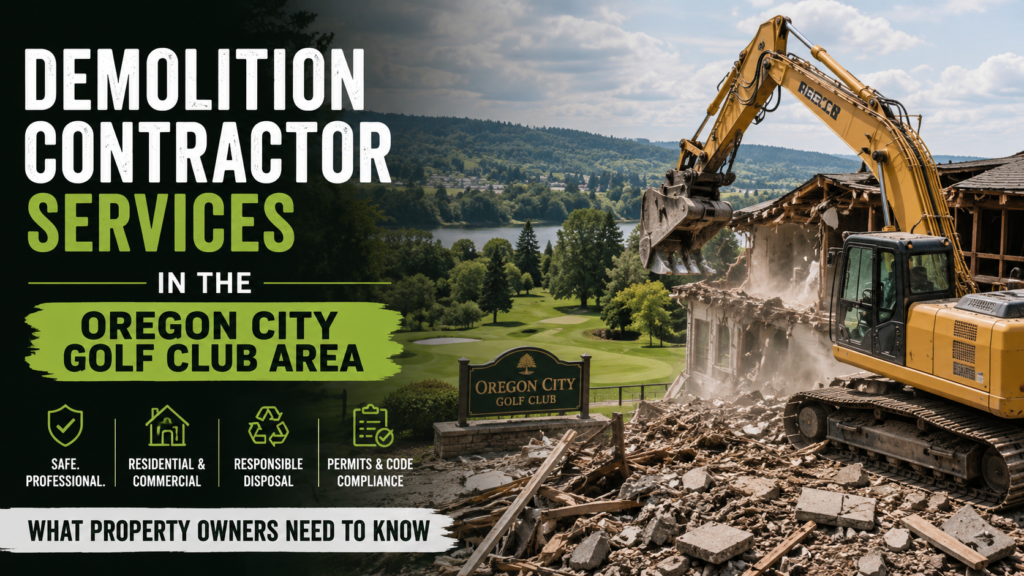
The Oregon City Golf Club area is a recognized neighborhood within Oregon City, Oregon, defined in part by its proximity to the historic golf course that has been part of the community landscape for generations. Oregon City itself carries significant historical weight as the first incorporated city west of the Rocky Mountains, the terminus of the Oregon Trail, and the original capital of the Oregon Territory. The Golf Club area neighborhood reflects the city layered development history, with a mix of established residential properties, some dating back many decades, alongside newer construction. For property owners in this area who are planning renovation projects, structural improvements, or land clearing, Demolition Contractor Oregon City Golf Club Area services are frequently a necessary first step. Understanding what professional demolition involves in this specific neighborhood context prepares property owners for what to expect.
The Neighborhood Character and Its Implications for Demolition
The Oregon City Golf Club area, like much of Oregon City established residential fabric, contains structures built across multiple decades of the twentieth century. Properties in established neighborhoods like this area often include homes from the 1940s through 1970s, with their associated outbuildings, garages, sheds, and accessory structures. Many of these structures are at an age where renovation costs can approach replacement costs, and where lead paint and potentially asbestos are present in original construction materials. These characteristics shape the demolition planning requirements for projects in this neighborhood.
Oregon City geographic character also matters for demolition. The city is built on terrain that includes both river bottom flatland along the Willamette and elevated bluff areas with significant grade changes. Properties in the Golf Club area may have terrain-influenced site conditions including slopes that affect equipment access, drainage patterns that affect post-demolition site management, and proximity to natural features that may involve additional environmental review requirements.
Oregon State Asbestos Requirements for Pre-1981 Structures
Oregon Department of Environmental Quality asbestos program requires that structures built before 1981 be surveyed by a certified asbestos inspector before any renovation or demolition that could disturb asbestos-containing materials. Asbestos was used extensively in construction through the late 1970s in materials including insulation, floor tile adhesives, ceiling tile, roofing felt, siding shingles, pipe insulation, textured wall coatings, and duct insulation. Many homes in the Oregon City Golf Club area were built during the peak era of asbestos use.
When an Oregon DEQ asbestos survey identifies regulated materials, licensed asbestos abatement contractors must remove those materials according to DEQ specifications before demolition proceeds. Oregon Oregon Construction Contractors Board (CCB) licensing is required for asbestos abatement work, and property owners should verify current CCB licensing for any abatement contractor they engage. Attempting demolition without a proper asbestos survey on a pre-1981 structure creates health risks for workers and neighbors, potential regulatory penalties for the property owner, and liability exposure if asbestos is later discovered to have been disturbed improperly.
City of Oregon City Demolition Permit Process
Structural demolition within Oregon City city limits requires a demolition permit from the City of Oregon City Building Department. The permit process involves submission of a permit application with required documentation including confirmation of utility disconnection and a review period that may include notification requirements for certain project types. Oregon City ordinances may also include neighborhood notification provisions that alert adjacent property owners to planned demolition activity before work begins.
Property owners planning demolition in the Golf Club area neighborhood should initiate the permit process well in advance of their desired project start date. Processing times vary with the department workload and the complexity of the project. Engaging a demolition contractor experienced in Oregon City permit requirements allows the property owner to benefit from the contractor familiarity with typical timeframes and documentation requirements.
Utility Disconnection Before Demolition
Before any structural demolition begins in Oregon City, all utilities serving the structure must be formally disconnected and verified by the serving utility companies. In the Oregon City Golf Club area, this typically involves Portland General Electric for electric service, NW Natural for gas service (where applicable), and the City of Oregon City water and sewer utility for water service. The required disconnection sequence and confirmation documentation vary by utility provider. Building permit applications typically require utility disconnection confirmation as part of the submission package.
Post-Demolition Site Preparation in the Golf Club Neighborhood
After demolition is complete and debris removed in the Oregon City Golf Club area, the cleared site must be appropriately prepared to prevent ongoing erosion and nuisance conditions, and to prepare the parcel for its next use. Oregon Pacific Northwest climate with its significant winter rainfall makes prompt erosion control on cleared sites particularly important. Exposed soil on a graded site in the Willamette Valley can lose significant topsoil during a single major rain event if not protected with seeding, erosion blanket, or other stabilization measures. Professional demolition contractors serving Oregon City who include site restoration as part of their project scope deliver cleared parcels in a condition appropriate for immediate reuse or for further development.
Conclusion
Demolition contractor services in the Oregon City Golf Club area operate within Oregon regulatory framework DEQ asbestos requirements, CCB contractor licensing, and City of Oregon City building permits while navigating the specific neighborhood character of one of Oregon City established residential communities. Property owners who understand the pre-demolition requirements, the role of asbestos assessment for older structures, and the importance of post-demolition site restoration are positioned to plan and execute their projects responsibly and effectively.